
- Premier Spine Care
- Pinched Nerve in the Neck
Pinched Nerve in the Neck (Cervical Radiculopathy)
Pain that runs from the neck into the shoulder, arm or hand usually comes from a nerve being pinched where it leaves the spine. Most cases settle without surgery. When they do not, the surgery is a short outpatient procedure.
Medically reviewed by Adrian P. Jackson, MD, board-certified, fellowship-trained spine surgeon · Updated November 2026
Appointments are scheduled through workers’ compensation referrals in Kansas and Missouri.
- Arm painfrom the neck into the shoulder, arm or hand
- Specific fingersnumbness that follows one nerve
- Most improvein weeks to a few months
- Home the same daywhen surgery is needed
The short answer
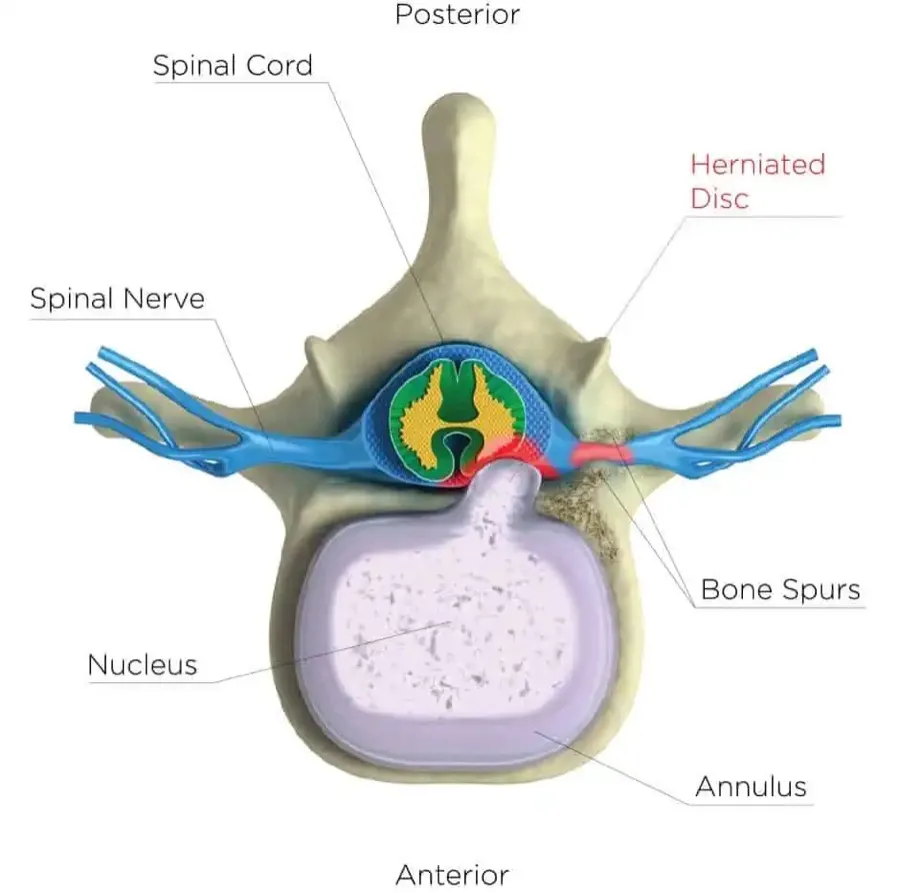
Cervical radiculopathy is the medical name for a pinched nerve in the neck. A herniated disc or a bone spur narrows the opening where a nerve leaves the spine, and the result is pain, numbness or weakness along that nerve's path into the arm.
Most people recover with time, physical therapy, medication and sometimes an injection. Surgery is considered when symptoms persist, when weakness is significant, or when the spinal cord is also compressed.
Where the nerve gets pinched
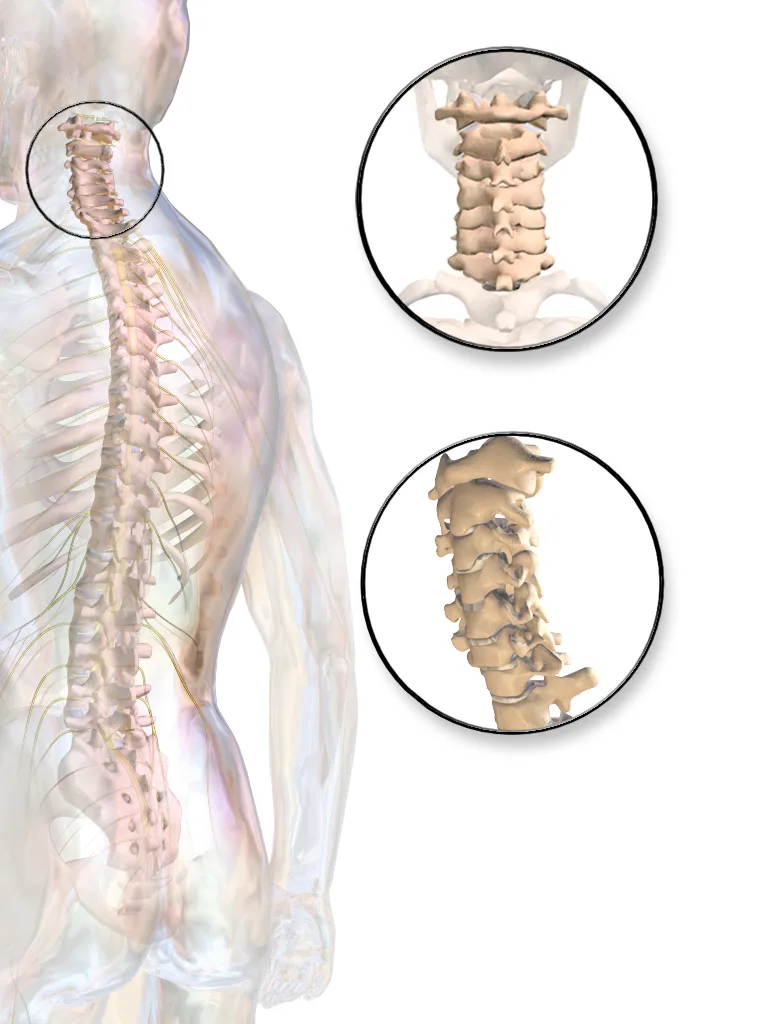
Seven bones make up the neck. Between each pair, a nerve leaves the spine through a small opening and travels to a specific part of the shoulder, arm and hand.
In younger adults the usual cause is a herniated disc. In older adults it is more often a bone spur from arthritis that narrows the opening. Either way, the nerve becomes inflamed, and the symptoms show up where that nerve goes rather than in the neck itself.
The pattern is specific enough that the examination often points to the exact level before the MRI confirms it.
What a pinched nerve in the neck feels like
Pain down the arm
Sharp or burning pain from the neck into the shoulder blade, shoulder, arm or hand. Usually one side.
Numb or tingling fingers
Thumb and index finger, the middle finger, or the ring and little fingers, depending on the nerve.
Weakness
Trouble lifting the arm, bending or straightening the elbow, or gripping.
Changes with neck position
Looking up or turning toward the painful side often makes it worse. Resting the hand on top of the head may ease it.
Is it my neck or my shoulder?
Shoulder problems and carpal tunnel syndrome can mimic a pinched nerve in the neck, and they often occur together. Pain that changes with neck movement, numbness in specific fingers and pain along the shoulder blade favor the neck. An examination sorts it out, sometimes with a nerve test.
If this began with an injury at work, our office handles workers' compensation claims in Kansas and Missouri every day. See how a work-injury claim moves from referral to full duty.
Signs of spinal cord pressure
- Clumsy hands, dropping things, trouble with buttons
- Unsteady walking or poor balance
- Symptoms in both arms or in the legs
- New bladder or bowel changes
These suggest the spinal cord is involved, which is a different and more urgent problem. See cervical myelopathy.
Treatment, one step at a time
Most pinched nerves in the neck recover without surgery.
- Most patients
Medication and activity changes
Anti-inflammatory medication, a short course of oral steroids in some cases, and avoiding the positions that provoke the pain.
- Most patients
Physical therapy
Gentle traction, posture work and strengthening for the neck and shoulder blade muscles.
- Some patients
Cervical epidural steroid injection
Medicine placed near the inflamed nerve under X-ray guidance to calm it down.
- If needed
Outpatient surgery
An anterior cervical discectomy and fusion (ACDF) or a cervical disc replacement removes the disc or spur pressing on the nerve through a small incision at the front of the neck. Most patients go home the same day.
See how the pressure is removed
This animation walks through an ACDF: the small incision, removing the disc, and placing the spacer and plate. It ends with a brief look at cervical disc replacement, which keeps motion at that level for patients who are candidates.
Cervical spine surgery is Dr. Jackson's fellowship-trained focus.


Your surgeon
Adrian P. Jackson, MD
Dr. Jackson has practiced spine surgery in the Kansas City area for more than 20 years. He treats both the neck and the low back, and he operates exclusively on an outpatient basis using minimally invasive techniques.
- Board certified, American Board of Orthopaedic Surgery
- Spine fellowship, Twin Cities Spine Center
- Orthopaedic residency, Northwestern University
- Exclusively outpatient, minimally invasive surgery
- Licensed in Kansas and Missouri
- Offices in Overland Park and Lenexa
Questions patients ask
How long does a pinched nerve in the neck take to heal?
Most people improve substantially within 6 to 12 weeks. Pain usually settles first. Numbness and strength can take longer to return.
When is surgery needed for cervical radiculopathy?
Surgery is considered when arm pain has not improved after about 6 to 12 weeks of conservative care, when weakness is significant or progressing, or when imaging shows the spinal cord is compressed as well.
Fusion or disc replacement: which is better?
Both remove the pressure on the nerve and have good results for arm pain. A disc replacement keeps motion at that level, but not everyone is a candidate. The choice depends on your age, the number of levels involved, the condition of the joints and the quality of the bone.
Will I lose motion in my neck after a fusion?
A one-level fusion removes a small portion of neck motion that most people do not notice in daily life. The levels above and below continue to move.
How soon can I work after neck surgery?
Our routine protocol after a one-level ACDF: a restricted return is possible between 3 and 6 weeks for sedentary work, full-time work with restrictions at 6 weeks, and ordinary duties at about 12 weeks.
This page is general education. It does not replace an examination, and it is not medical advice for your situation. If you have severe or sudden symptoms, call 911 or go to the nearest emergency room.
Keep reading
Appointments for work injuries
Premier Spine Care schedules appointments through workers’ compensation referrals in Kansas and Missouri. Case managers, adjusters and law offices can send a referral online, and the appointment is scheduled within 24 hours. If you were hurt at work, ask your adjuster or case manager about a referral.
Premier Spine Care · Overland Park and Lenexa, Kansas · Serving the Kansas City metro in Kansas and Missouri