1. Premier Spine Care
  2. Lumbar Laminectomy
Treatment · Low back

Lumbar Laminectomy (Spinal Decompression Surgery)

A laminectomy removes the bone and thickened ligament that are crowding the nerves in the low back. It is the standard operation for lumbar spinal stenosis, and it reliably improves leg pain and walking.

Medically reviewed by Adrian P. Jackson, MD, board-certified, fellowship-trained spine surgeon · Updated November 2026

Appointments are scheduled through workers’ compensation referrals in Kansas and Missouri.

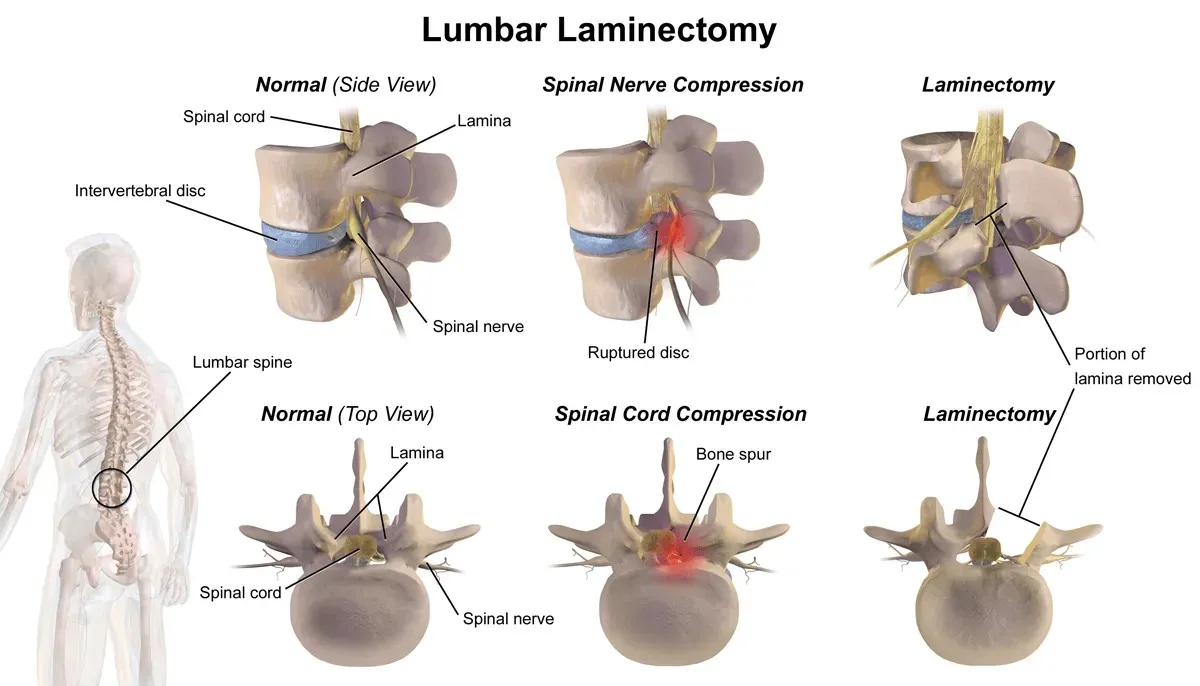
Side and top views of the lumbar spine: normal anatomy, compressed nerves, and the canal after a laminectomy
Left: normal. Middle: nerves compressed by a disc or bone spur. Right: after part of the lamina is removed. Illustration: BruceBlaus, CC BY-SA 4.0.

The short answer

A lumbar laminectomy is surgery to decompress the nerves in the low back. The surgeon removes part of the lamina, the bony roof of the spinal canal, along with thickened ligament and bone spurs, so the nerves have room again.

It is most often done for spinal stenosis that limits walking despite therapy and injections. It is a different thing from non-surgical spinal decompression therapy, which is a form of traction.

Candidates

Who it is for

  • Leg symptoms with walking

    Pain, heaviness or numbness in the legs from spinal stenosis that limits how far you can walk or stand.

  • Conservative care has not been enough

    Physical therapy, medication and epidural steroid injections have been tried.

  • Imaging that matches

    An MRI shows narrowing at the level that fits your symptoms and examination.

  • A stable spine

    When a vertebra has slipped and is unstable, a fusion may be added. See spondylolisthesis.

The procedure

How a laminectomy is done

You are asleep under general anesthesia and positioned face down. Through an incision in the low back, the surgeon reaches the lamina at the narrowed level.

Part of the lamina is removed, sometimes only a small window (a laminotomy), together with the thickened ligament and any bone spurs pressing on the nerves. If a disc herniation is contributing, that fragment is removed too.

The joints that keep the spine stable are preserved. In most patients no hardware is needed.

Cross-sections of the spine showing a normal spinal canal and a canal narrowed by stenosis
The problem being treated. Bottom: a normal canal. Top: a canal narrowed by stenosis. Illustration: BruceBlaus, CC BY 3.0.
Clearing up a common mix-up

Decompression surgery is not decompression therapy

The two share a name and little else.

Decompression surgery (laminectomy)Decompression therapy (traction table)
What it isAn operation performed by a spine surgeonA motorized traction treatment, usually offered in chiropractic or therapy clinics
How it worksPermanently removes the bone and ligament narrowing the canalGently stretches the spine for a series of sessions
Used forStenosis or a herniated disc with nerve compression that has not responded to conservative careBack or leg pain, as one of several conservative options
Where it fitsAfter conservative care has been triedBefore surgery is considered
Short video

See how the canal is opened

This animation shows where the nerves are crowded and how a laminectomy gives them room.

The lumbar decompression recovery guide covers preparation, surgery day and each stage of recovery.

Recovery

Return to work, at a glance

Our routine protocol after a lumbar decompression. Restrictions are documented at each visit.

WhenWork status
Surgery to 6 weeksOff work for up to 6 weeks. A restricted return is possible between 3 and 6 weeks for sedentary work or when the employer can accommodate part-time hours.
6 to 12 weeksFull-time work with restrictions: no lifting over 15 pounds, no repetitive bending or lifting, no overhead work, and alternate sitting and standing as needed.
About 12 weeksTypically released to ordinary duties without restrictions.

Individual recovery varies, and your surgeon will personalize the plan.

Your surgeons

Two fellowship-trained spine surgeons

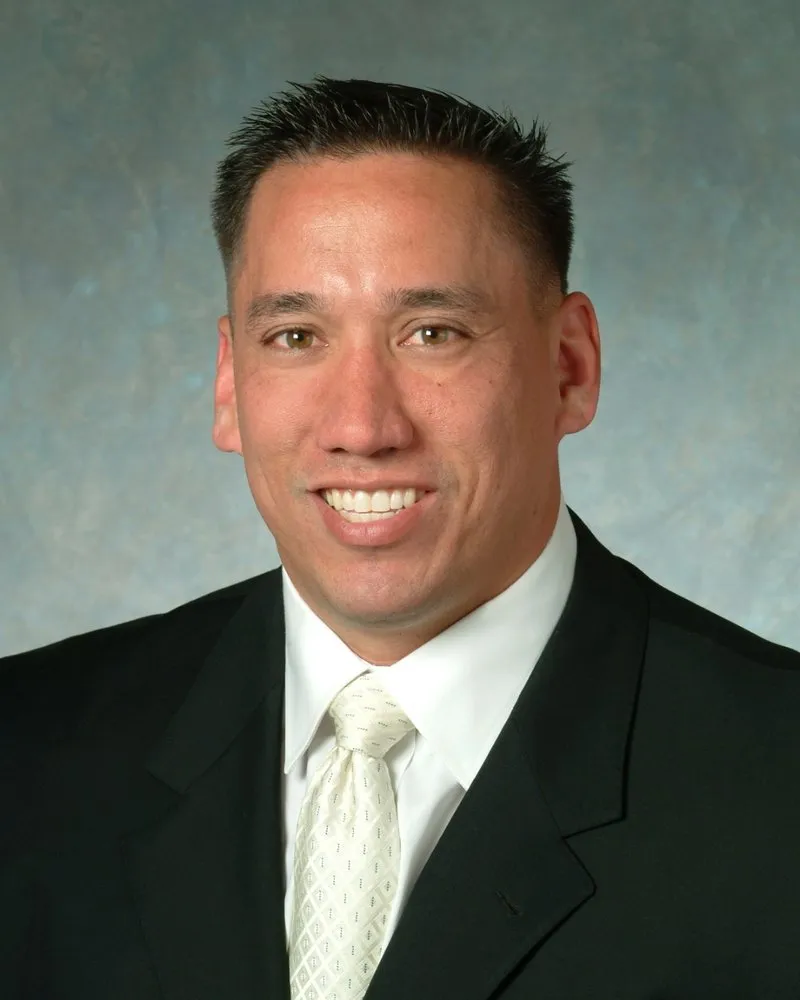
Adrian P. Jackson, MD

Adrian P. Jackson, MD

Board-certified, fellowship-trained spine surgeon

Dr. Jackson has practiced spine surgery in the Kansas City area for more than 20 years. He treats both the neck and the low back, and he operates exclusively on an outpatient basis using minimally invasive techniques.

  • Board certified, American Board of Orthopaedic Surgery
  • Spine fellowship, Twin Cities Spine Center
  • Orthopaedic residency, Northwestern University
About Dr. Jackson
John M. Ciccarelli, MD

John M. Ciccarelli, MD

Board-certified, fellowship-trained spine surgeon

Dr. Ciccarelli specializes in the lumbar spine, including fusion for spondylolisthesis and other conditions where the spine needs to be stabilized.

  • Board certified, American Board of Orthopaedic Surgery
  • Spine fellowship, Scoliosis and Spine Center, Baltimore
  • Orthopaedic residency, Orlando Regional Medical Center
About Dr. Ciccarelli
Common questions

Questions patients ask

Is a laminectomy major surgery?

It is a real operation under general anesthesia, but for one or two levels it is usually done on an outpatient basis. Most of our patients walk within hours and go home the same day.

Will I need a fusion too?

Most patients with stenosis alone do not. A fusion is added when a vertebra has slipped and is unstable, or when enough bone must be removed that the spine would become unstable.

How much improvement should I expect?

Leg pain and walking distance improve in most patients. Back pain may improve but is less predictable. Numbness that has been present for a long time can be slow to recover and may not resolve fully.

Can stenosis come back after surgery?

The treated level usually stays open. Because arthritis continues with age, stenosis can develop at other levels years later.

What are the risks?

As with any operation, there are risks. They include, but are not limited to, infection, bleeding, a spinal fluid leak, nerve injury, blood clots, incomplete relief or return of symptoms, the need for further surgery, and the risks of anesthesia. Your surgeon reviews the risks that apply to you before you decide.

This page is general education. It does not replace an examination, and it is not medical advice for your situation. If you have severe or sudden symptoms, call 911 or go to the nearest emergency room.

Appointments for work injuries

Premier Spine Care schedules appointments through workers’ compensation referrals in Kansas and Missouri. Case managers, adjusters and law offices can send a referral online, and the appointment is scheduled within 24 hours. If you were hurt at work, ask your adjuster or case manager about a referral.

Premier Spine Care · Overland Park and Lenexa, Kansas · Serving the Kansas City metro in Kansas and Missouri
Call Refer a patient