
- Premier Spine Care
- Cervical Myelopathy
Cervical Myelopathy (Spinal Cord Compression)
Cervical myelopathy means the spinal cord is being squeezed in the neck. It often shows up as clumsy hands or unsteady walking rather than pain. It tends to get worse over time, so it deserves a prompt evaluation.
Medically reviewed by Adrian P. Jackson, MD, board-certified, fellowship-trained spine surgeon · Updated November 2026
Appointments are scheduled through workers’ compensation referrals in Kansas and Missouri.
- Hands and balanceare affected more often than pain
- Usually progressiveit rarely improves on its own
- Surgery is the main treatmentto stop it from getting worse
- Earlier is betterfor recovery of function
The short answer
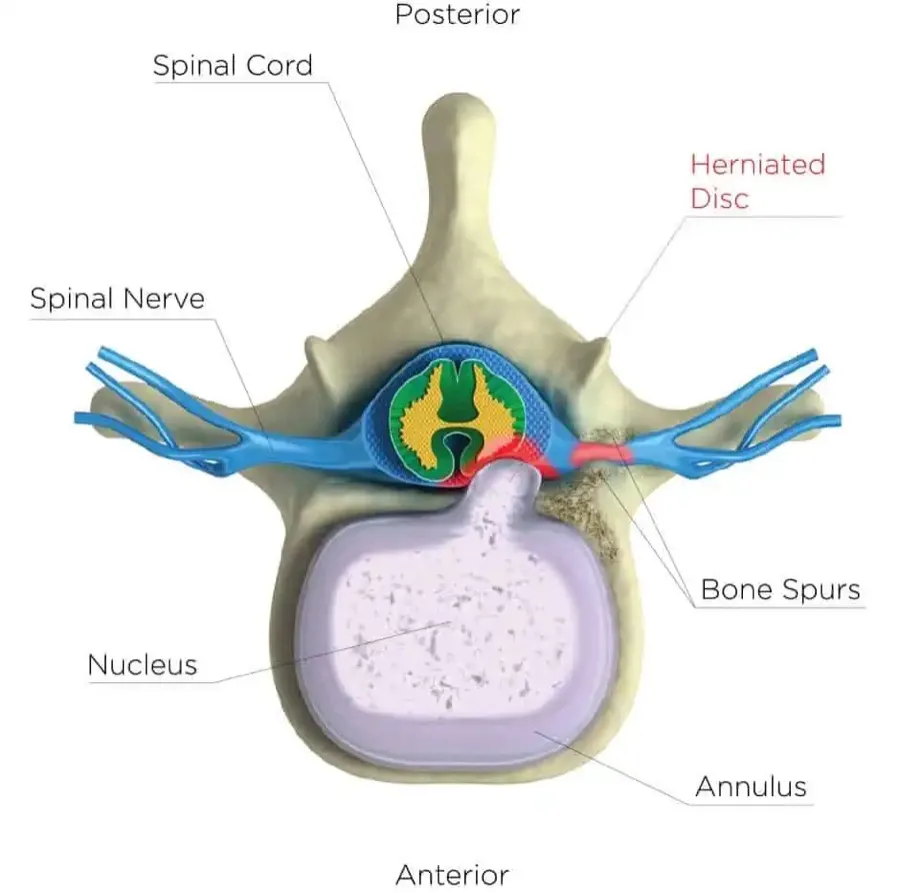
Cervical myelopathy is a loss of function caused by pressure on the spinal cord in the neck, most often from arthritis, bone spurs and bulging discs that narrow the canal. Typical signs are clumsy hands, trouble with buttons or handwriting, and unsteady walking.
Unlike a pinched nerve, myelopathy usually does not get better with therapy or injections. Surgery to take the pressure off the spinal cord is the main treatment. Its first goal is to stop the decline, and many patients also regain function.
Pressure on the spinal cord itself
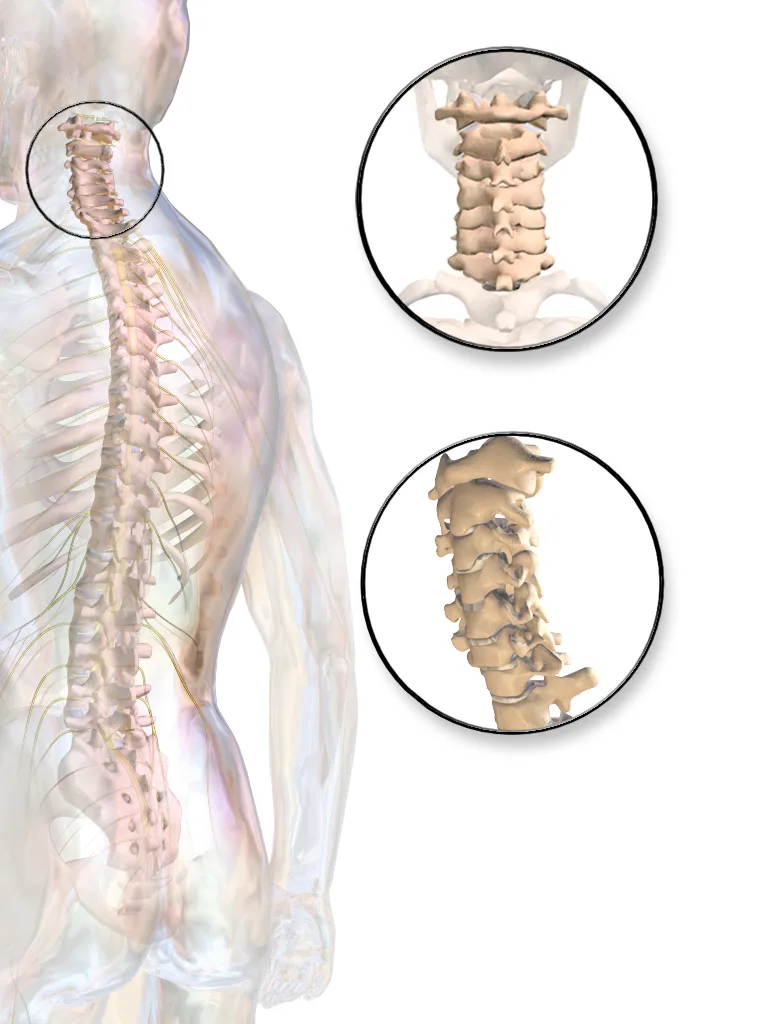
The spinal cord carries every signal between the brain and the body. In the neck it passes through a bony canal with little room to spare.
With age the discs flatten and bulge, bone spurs form and ligaments thicken. Some people are also born with a narrow canal. When the space gets tight enough, the cord is compressed. A disc herniation or a fall can then tip a narrow canal into symptoms.
Nerve roots tolerate pressure fairly well and often recover. The spinal cord does not. That is the reason myelopathy is handled differently from a pinched nerve in the neck.
Signs that are easy to miss
Myelopathy often comes on gradually and without much pain, so it is frequently blamed on aging.
Clumsy hands
Dropping things, trouble with buttons, zippers, keys or handwriting.
Unsteady walking
Feeling off balance, needing a handrail, or legs that feel stiff or heavy.
Numbness or tingling
In the hands and fingers, sometimes in the arms or legs.
Electric sensations
A shock down the spine or into the limbs when bending the neck forward.
How it is diagnosed
The examination looks for brisk reflexes, changes in hand coordination and changes in the way you walk. An MRI of the neck shows where the cord is compressed and whether the cord itself has changed. X-rays show alignment and stability.
If this began with an injury at work, our office handles workers' compensation claims in Kansas and Missouri every day. See how a work-injury claim moves from referral to full duty.
Call promptly if you notice
- Hands or walking getting worse over weeks
- New weakness in the arms or legs
- New bladder or bowel urgency or loss of control
- Any of these after a fall or a car crash
A person with a tight canal can worsen suddenly after even a minor injury. Do not wait for a routine appointment.
Why surgery is usually recommended
The goal is to make room for the spinal cord before more function is lost.
- Mild cases
Careful observation
Very mild myelopathy without progression can sometimes be watched with regular examinations. Therapy and injections may help neck or arm pain but do not relieve pressure on the cord.
- From the front
Anterior cervical discectomy and fusion (ACDF)
When the pressure comes from discs and spurs at one to three levels, they are removed through a small incision at the front of the neck. See the ACDF recovery guide.
- From the back
Posterior cervical decompression
When several levels are narrow, the back of the canal is opened (a laminectomy) to give the cord room, sometimes with a fusion for stability.
- Afterward
Recovery of function
Surgery reliably stops the decline. How much function returns depends mostly on how severe the symptoms were and how long they were present. Improvement can continue for 12 to 18 months.
See an ACDF step by step
For many patients with myelopathy at one or two levels, an ACDF takes the pressure off the spinal cord through a small incision at the front of the neck. This animation shows each step.
Cervical spine surgery is Dr. Jackson's fellowship-trained focus.


Your surgeon
Adrian P. Jackson, MD
Dr. Jackson has practiced spine surgery in the Kansas City area for more than 20 years. He treats both the neck and the low back, and he operates exclusively on an outpatient basis using minimally invasive techniques.
- Board certified, American Board of Orthopaedic Surgery
- Spine fellowship, Twin Cities Spine Center
- Orthopaedic residency, Northwestern University
- Exclusively outpatient, minimally invasive surgery
- Licensed in Kansas and Missouri
- Offices in Overland Park and Lenexa
Questions patients ask
Can cervical myelopathy get better without surgery?
It is uncommon. Most cases stay the same for a while and then worsen, sometimes in steps. Because lost function may not fully return, surgery is usually recommended once myelopathy is clearly present.
Is cervical myelopathy an emergency?
It is usually urgent rather than an emergency. Rapidly worsening weakness, new loss of bladder or bowel control, or symptoms after a fall should be evaluated the same day.
Will surgery reverse my symptoms?
The first goal of surgery is to stop further loss. Many patients also regain hand function, balance and strength. Recovery is better when surgery is done before symptoms are severe or long-standing.
What is the difference between myelopathy and radiculopathy?
Radiculopathy is a pinched nerve root and causes pain, numbness or weakness in one arm. Myelopathy is pressure on the spinal cord itself and affects hand coordination, walking and sometimes the bladder. A person can have both.
How long is the recovery from surgery?
It depends on the operation. After a one- or two-level ACDF, most of our patients go home the same day and follow the same return-to-work steps as other ACDF patients. Recovery of nerve function continues for many months.
This page is general education. It does not replace an examination, and it is not medical advice for your situation. If you have severe or sudden symptoms, call 911 or go to the nearest emergency room.
Keep reading
Appointments for work injuries
Premier Spine Care schedules appointments through workers’ compensation referrals in Kansas and Missouri. Case managers, adjusters and law offices can send a referral online, and the appointment is scheduled within 24 hours. If you were hurt at work, ask your adjuster or case manager about a referral.
Premier Spine Care · Overland Park and Lenexa, Kansas · Serving the Kansas City metro in Kansas and Missouri